
Is It Really Necessary to Remove a Tree Stump?
A tree stump can look harmless at first. It sits low to the ground, blends into the yard, and may not seem urgent after the hard work of removing a tree is already done.
Lot sizes in New Haven and Bridgeport tend to run smaller than in more rural parts of Connecticut, so a leftover stump takes up a bigger share of usable yard space than it would on a large rural property. That's especially true in older neighborhoods where a tree came down years ago and the stump was just left in place. For most of these properties, stump grinding is the practical fix: it clears the tripping hazard and pest activity without the extra cost and yard disruption of a full root ball extraction.
Why Leaving a Stump Can Become a Problem
After a tree is cut down, the stump does not simply disappear on its own. It may slowly decay, but that process can take years. During that time, the stump can attract insects, weaken your lawn’s appearance, and get in the way of normal yard use.
For homeowners comparing options like stump grinding in New Haven CT, it helps to understand what is really at stake. A leftover stump can become a breeding spot for ants, termites, beetles, and other pests. Once pests settle into rotting wood, they may move toward nearby trees, fences, sheds, or even the home.
A stump can also create a tripping hazard. This matters even more if you have children, older adults, guests, or anyone walking across the yard in low light. What looks like a minor inconvenience today can become a liability tomorrow.
Stumps Can Affect Lawn Care and Curb Appeal
One of the most common reasons people remove stumps is simple: they make the yard harder to maintain. Mowing around a stump takes extra effort, and one wrong turn can damage mower blades. Weeds and grass can also grow around the base, making the area look neglected.
If you are already hiring a tree service in New Haven CT, it often makes sense to ask about stump options while the crew is handling the rest of the job. Removing the stump gives you a cleaner, safer, and more usable yard.
A stump may also limit future landscaping plans. Want to plant new grass, install a garden bed, add a walkway, or improve outdoor seating? That old stump can stand directly in the way.
Common issues caused by leftover stumps include:
Uneven lawn appearance
Pest activity around decaying wood
New shoots or unwanted regrowth
Difficulty mowing or trimming
Reduced usable yard space
Possible trip-and-fall risks
Can a Stump Grow Back?
Sometimes, yes. Certain tree species can send up new shoots from the stump or remaining root system. These shoots rarely grow into a healthy, well-shaped tree. Instead, they often become messy clusters of weak growth that need repeated trimming.
This is one reason tree stump removal is often recommended when homeowners want a clean finish after tree removal. It prevents repeated maintenance and helps stop the tree from trying to return in an unwanted way.
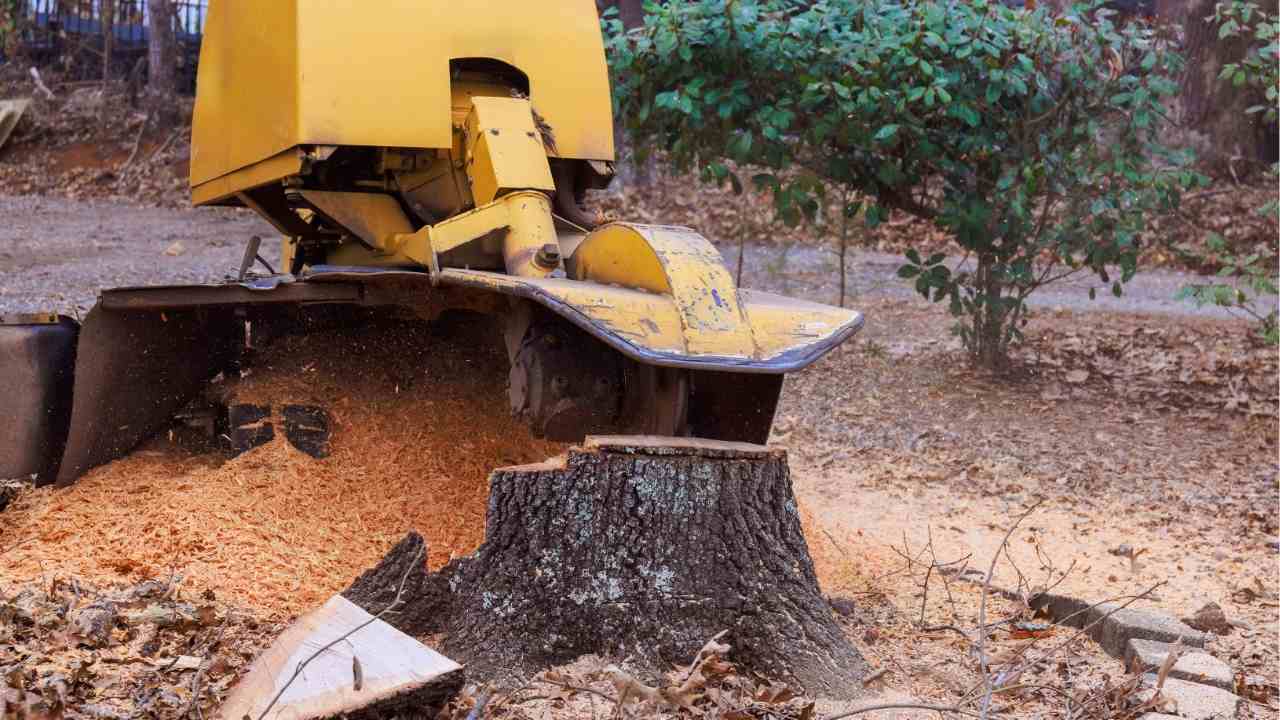
Stump grinding is usually the preferred method for many residential properties. Instead of digging out the entire root system, a machine grinds the stump below ground level. The area can then be filled, leveled, and prepared for grass or landscaping.
When Is It Okay to Leave a Stump?
Not every stump must be removed immediately. If the stump is far from the house, not in a walking area, not attracting pests, and not interfering with your plans, you may choose to leave it for a while.
Some homeowners even turn old stumps into rustic garden features, planter bases, or natural seating. That can work in the right setting. But be honest about the condition of the wood. A decorative stump that is rotting, unstable, or full of insects is not adding charm. It is adding future work.
Short Case Study: A Small Stump, a Bigger Yard Problem
A homeowner removed a medium-sized maple from the front yard but left the stump because it seemed cheaper at the time. Within a year, grass stopped growing well around it, weeds filled the edges, and small shoots kept sprouting from the base. Mowing became annoying, and the stump made the front lawn look unfinished. After having it ground down, the area was leveled, reseeded, and folded into the family's regular lawn care routine.
Final Thoughts
So, is it really necessary to remove a tree stump? In many cases, yes. A stump can affect safety, appearance, lawn care, pest control, and future landscaping. While leaving one may save money upfront, it can create more trouble over time.
If the stump is in the way, attracting pests, growing shoots, or making your yard look unfinished, removal is the smarter move. Take a close look at your yard and decide whether that stump is worth keeping or whether it is finally time to get rid of it.
Take a look around your New Haven or Bridgeport property for stumps that are costing you yard space or attracting pests. Call Avalanche Tree and Landscaping at (203) 800-3010 or contact us to schedule a professional stump assessment.