


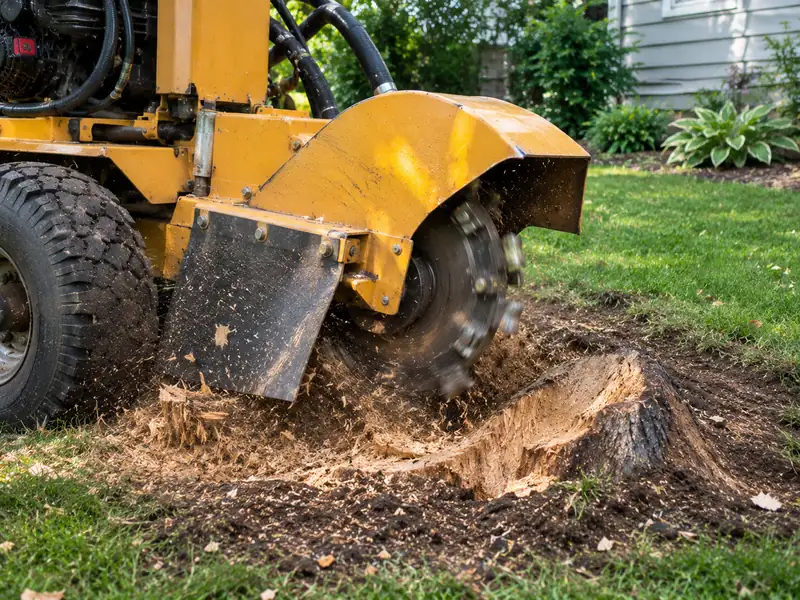
Stump Grinding Cost in the New Haven Area: What Actually Sets the Price
A stump left behind after a tree comes down rarely stays out of the way. It sits in the mowing line, sprouts new shoots in spring, and slowly turns into a home for ants and fungus. Most homeowners around New Haven get to the point of asking what it will take to get rid of it, and the honest answer is that stump grinding cost depends far more on the stump and the yard than on any flat rate.
Stump grinding is priced mainly on the stump's diameter at ground level, then adjusted for how easy the stump is to reach, how many stumps are being done in one visit, the wood and root spread, what is underground nearby, and whether cleanup is included. Two stumps that look similar in a photo can be very different jobs. The most reliable way to know your price is a quote from someone who has seen the stump, ideally with the job broken down so you can compare it fairly against other quotes.
Below is how each of those factors works, what makes a job lighter or bigger, and what to ask before you book. If you already know you want it gone, our stump grinding service in New Haven page explains how we handle the work.
1. Stump diameter
Diameter is the starting point for almost every stump grinding quote. Grinders measure across the widest point of the stump at ground level, not at the cut height, because the flare of the trunk near the soil is the part the machine has to chew through.
A wider stump takes more passes, more time on the machine, and produces more grindings to deal with afterward. That is why many companies price by the inch of diameter, while others set a price per stump and adjust it for size. Either way, measuring the stump yourself before you call gives you a much more useful conversation.
2. How easy the stump is to reach
Access can change a job as much as size. A stump in an open backyard with a wide gate is simple. A stump tucked behind a fence, wedged against a foundation, sitting on a slope, or reachable only through a narrow side gate may need a smaller machine, more careful positioning, and more time.
If a fence, retaining wall, or driveway sits between the street and the stump, describe (or photograph) the route when you ask for a quote. It helps the company bring the right machine the first time.
3. How many stumps you have
Getting the equipment to your property and set up is part of the cost of every visit. When several stumps are ground in one trip, that setup is shared across all of them, so the cost per stump usually comes down. If you have more than one stump, or you are planning another tree removal soon, it often makes sense to schedule them together.
Some companies also have a minimum charge for a visit, which matters most when you only have one small stump.
4. Wood type, age and roots
Dense hardwoods take longer to grind than softer wood. Large surface roots spreading across the lawn add work too, because they may need to be ground separately if you want the area level for mowing or planting.
The stump's age plays a part. A stump that has been sitting for years may have softened as it decays, while a freshly cut one is still solid. If you are weighing whether to wait, our post on how long you should wait to remove a stump covers the tradeoffs.
5. What is underground and nearby
A grinder cuts below the soil line, so what is buried around the stump matters. Gas, water, electric, and irrigation lines near the stump call for extra care. Connecticut's Call Before You Dig program (dial 811) marks public underground utilities before ground work, and private lines such as sprinkler pipes and landscape lighting wires need to be located by the homeowner.
Rocks, old concrete, and buried debris around a stump can also slow the job down.
6. Grinding depth and cleanup
How deep the stump is ground, and what happens to the grindings afterward, both shape the final number. Grinding a few inches below grade is enough for most lawns. If you plan to replant a tree, lay sod, or set pavers in the same spot, you may need it ground deeper.
Grinding leaves a pile of wood chips and soil roughly where the stump was. Some homeowners keep them as mulch, others want them raked out, hauled away, or replaced with topsoil and seed. Make sure your quote says which of those is included. Our guide on what to do with wood chips after stump grinding walks through the options.
Lighter jobs vs. bigger jobs at a glance
Factor | A lighter job | A bigger job |
|---|---|---|
Diameter | Small stump, little trunk flare | Wide stump with a broad flare at the soil line |
Access | Open yard, wide gate, level ground | Narrow side gate, slope, tight to a fence or foundation |
Number of stumps | Several stumps done in one visit | A single stump on its own trip |
Wood and roots | Softer or decayed wood, few surface roots | Dense hardwood, large roots across the lawn |
Underground | Utilities marked and well clear | Lines, irrigation, rock or debris close by |
Depth and cleanup | Standard depth, grindings left as mulch | Extra depth for replanting, grindings hauled and spot backfilled |
Grinding vs. full stump removal
Grinding and removal are different services, and mixing them up is one of the main reasons quotes seem far apart. Grinding chips the stump down below ground level and leaves the deeper roots to break down naturally. Full removal digs out the stump and a large part of the root ball, which takes heavier equipment, leaves a much bigger hole, and needs backfilling.
For most yards, grinding is the less involved option and is enough to mow, plant grass, or replant nearby. Full removal is usually only worth it when you need the ground fully clear for construction, such as a new foundation or a patio footing. If you are not sure whether you need either, see is it necessary to remove a tree stump.
Why two quotes for the same stump can look so different
When homeowners compare notes online, the same worry comes up again and again: one company quotes far more than another for what looks like the same stump, and it is hard to tell who is being fair. Usually the difference comes from what each quote includes, not from one company overcharging.
Quotes can be built in different ways:
Per inch of diameter. Clear and easy to compare, as long as both companies measured the same way.
Per stump. Simple, but check what size range the price covers.
By the hour or by the visit. Common for several stumps or difficult access.
With or without cleanup. Raking out, hauling the grindings, and backfilling with topsoil all add time.
With or without surface roots. Some quotes cover only the main stump.
The fix is simple. Ask each company to list what they measured and what is included, then compare like with like.
Signs it may be time to grind that stump
New shoots keep sprouting from the stump or its roots.
You are mowing around it, or it has damaged a mower blade.
Ants, termites, or other insects are moving into the wood.
Mushrooms or fungus are growing on or around it.
It is a trip hazard near a walkway, play area, or driveway.
You want to replant, reseed, or put in a garden bed or patio in that spot.
What to ask before you book
How are you measuring the stump, and is the price per inch, per stump, or per visit?
How far below ground will you grind?
Are surface roots included, or just the main stump?
What happens to the grindings: left on site, raked out, or hauled away?
Will you fill the hole with topsoil, and is that included?
Who arranges the Call Before You Dig utility mark-out?
Is the stump on my property, or in the city strip between the sidewalk and the curb? (Trees in that strip may belong to the City of New Haven, so check with the city's Tree Division before anyone grinds it.)
How will you protect my lawn, fence, and garden beds while getting the machine in?
Frequently asked questions
Is it cheaper to grind or remove a stump?
Grinding is usually the less expensive option because it only takes the stump down below ground level. Full removal means digging out the stump and much of the root ball, which takes more equipment and time and leaves a larger hole to fill.
How much does it cost to grind a 24 inch stump?
It depends on how the company prices the job and on the site. A 24 inch measurement gives a company the main number it needs, but access, wood type, roots, nearby utilities and cleanup can all move the price. Send the measurement and a few photos when you ask for a quote.
How do you calculate stump grinding cost?
Most companies start with the stump's diameter at ground level, either as a price per inch or a price per stump for a given size. They then adjust for access, the number of stumps, roots, underground hazards, grinding depth and cleanup.
Can you grind a stump yourself?
Rental stump grinders are available, but they are heavy, they throw debris, and they cut below the soil where utility lines and rocks may be hiding. Utilities need to be marked first through Call Before You Dig. For large stumps, stumps near structures, or more than one stump, many homeowners find a professional visit simpler and safer.
Get a stump grinding quote in the New Haven area
Avalanche Tree and Landscaping grinds stumps for homeowners in New Haven, West Haven, East Haven, North Haven, Hamden and Woodbridge. Tell us the stump's diameter, where it sits in the yard, and how you would like the area left, and use the questions above to talk through anything that affects your stump grinding cost before the job is booked.
Call (203) 800-3010 or request a free quote online. You can also read more about our stump grinding service, check our service area, or, if the tree is still standing, see our guide to tree removal cost in Connecticut.